Showing posts with label Medicine. Show all posts

How to Live to 102 - Secret #36

Home remedy for colds and flus: Mix 1/2 a teaspoon of garlic juice and 1/2 a teaspoon of honey into a cup of warm water. Drink a cup of this mixture three times a day.


Home Care Assistance offers the highest quality 24/7 live-in home care in the Region of Halton (Oakville, Burlington, Halton Hills, and Milton), Region of Peel (Mississauga, Brampton and Caledon), Hamilton and surrounding areas.

Nasal spray may prevent Alzheimer's

From Home Care Assistance North Houston:

A nasal spray that can prevent Alzheimer’s disease and a stroke? Too good to be true?

Not according to researchers from Tel Aviv University. They say they’ve developed a medication that can be used as a nasal spray and protect against Alzheimer’s and strokes that are related to Alzheimer’s disease. The spray would repair vascular damage in the brain by triggering the body’s immune system.

Dr. Dan Frenkel, of the Tel Aviv University’s Department of Neurobiology, says he and other researchers are using part of a drug that was previously tested as an influenza treatment to induce an immune response against a build-up of amyloid proteins, or brain peptides, in the blood vessels. This build-up can lead to development of Alzheimer’s disease.

“In early pre-clinical studies, we’ve found it can prevent both brain tissue damage and restore cognitive impairment,” said Frenkel.

Dr. Alan J. Lerner, director of the Memory and Cognition Center at University Hospitals Case Medical Center in Ohio, praised the nasal spray, adding that not all drugs need to come in a pill or a shot.

“I think we should be excited about this research because Alzheimer’s is such a major public health problem,” said Lerner, who was not involved in the study. “It affects 5 million people and the Baby Boomers will add 10 to 15 million more patients to that. “

Frenkel believes the new findings, accepted by the journal Neurobiology of Aging, may lead to a future breakthrough for a vaccine and a long-sought cure for Alzheimer’s. “This might open a new horizon of treatment targeting the immune response that can both reduce stroke incident in Alzheimer’s and also prevent disease progression,” Frenkel told AOL Health.

The vaccine activates macrophages, or large proteins in the body that devour foreign antigens. Large numbers of activated macrophages dispose of amyloid protein build-up in the brain’s vascular system. Trials in animals have shown that further damage can be prevented once these proteins are expelled from the brain, meaing existing damage due to a previous stroke could be repaired. The vaccine may also treat patients who are already experiencing Alzheimer’s symptoms.

“We’ve found a way to use the immune response stimulated by this drug to prevent hemorrhagic strokes which lead to permanent brain damage,” Frenkel added.

Researchers used mice to monitor the effect of the drug through “object recognition” tests, which evaluated cognitive function before and after vaccine injection. MRI screenings confirmed that further vascular damage was prevented after administration of the vaccine, and that object recognition tests indicated those animals treated with the vaccine returned to normal behavior. So far the vaccine has shown no toxic side effects in mice.

Lerner’s one concern is that the drug has not been tested on humans, although he says the theory behind the spray is backed previous research.

“There’s been an immune theory about Alzheimer’s around for about 20 years and it looks like this is an immune-mediated approach,” Lerner said. “In the past we’ve tried giving people prednisone and anti-inflamatory drugs. There are currently antibodies in clinical testing.”

Frenkel believes the drug may have the same effect in humans, both in preventing the diseases and in treating patients who have already been diagnosed. In fact, if further research supports the vaccine’s efficacy, it could have the potential to treat the dementia associated with Alzheimer’s in as many as 80 percent of patients.

While Frenkel was unable to comment on when the drug could potentially be available, he noted it has already been tested for safety as an influenza treatment by GlaxoSmithKline.

“The layperson should know that help is on the way,” said Lerner, whose own center at University Hospitals does a lot of research in this area. “You’re not going to be able to go out and get this right away. But we have to support Alzheimer’s research. It’s stalled in terms of dollars and students are being told to study something else.

“Sometimes we can look to other countries such as Israel for ideas,” Lerner added. “Our center does a lot of clinical trials We don’t want to keep doing the same cookie-cutter things. So this research is very germane.”

AOL Health writer Ronnie Koenig contributed to this report.
Huso, Deborah, and Ronnie Koenig. “Researchers Say Nasal Spray May Prevent Alzheimer’s, Stroke.” AOL Health. 1 Mar. 2011. Web. 03 Mar. 2011. .


Home Care Assistance offers the highest quality 24/7 live-in home care in the Region of Halton (Oakville, Burlington, Halton Hills, and Milton), Region of Peel (Mississauga, Brampton and Caledon), Hamilton and surrounding areas.

6 signs that your cough could be more than just that

Many of us cough periodically throughout the day and don’t think anything of it. But, a cough can be more serious than you think. An article on caring.com shares six important questions to ask yourself or a loved one, to figure out if there may be more to your cough than meets the eye:

1. How long has the cough been going on? A cough may occur for various reasons – a blocked airway, the common cold, or more a serious underlying disease – and it may last anywhere from a few hours to a few weeks. If a cough lasts over eight weeks, it is considered “chronic” and should be treated. Most of the time, when the problem is treated, it will go away.

2. When does the cough occur? Seasonal allergies can cause coughing at certain times during the year. Nerves can cause habitual coughing before you speak and even sometimes, the body will cough involuntarily, which can be a sign of an underlying disease. Taking certain medications can also cause coughing, but will usually go away once the body adjusts to the medication.

3. Is the cough productive – meaning, do you produce anything when you cough? Cough production can range from absolutely nothing to greenish phlegm to bloody mucus. Usually, the more colorful the result, the more serious the cough. Consult your doctor if you see greenish phlegm. It can be an indication of a bacterial disease. Blood-streaked mucus can also indicate pneumonia, tuberculosis, or other serious diseases.

4. What does the cough sound like? A wheezy cough can be a sign of asthma and a loud, barking cough occur in smokers. And a “whooping” sound can indicate a very severe and persistent cough called the “whooping cough.” Adults over the age of 65 and small children are more susceptible to this kind of cough and are advised to get boosters in order to protect them from the disease.

5. Do you experience other symptoms along with the cough? Symptoms to look out for include, but are not limited to, fever, shortness of breath, chest pain and heartburn. These can be signs of another underlying disease that may require additional treatment.

6. Now what? If a cough is persistent, or if you feel that the symptoms are abnormal, always check with a physician. They will be able to determine if your cough is more than just a cough.

By Dr. Kathy Johnson
Source: Home Care Blog

Home Care Assistance offers the highest quality 24/7 live-in home care in the Region of Halton (Oakville, Burlington, Halton Hills, and Milton), Region of Peel (Mississauga, Brampton and Caledon), Hamilton and surrounding areas.

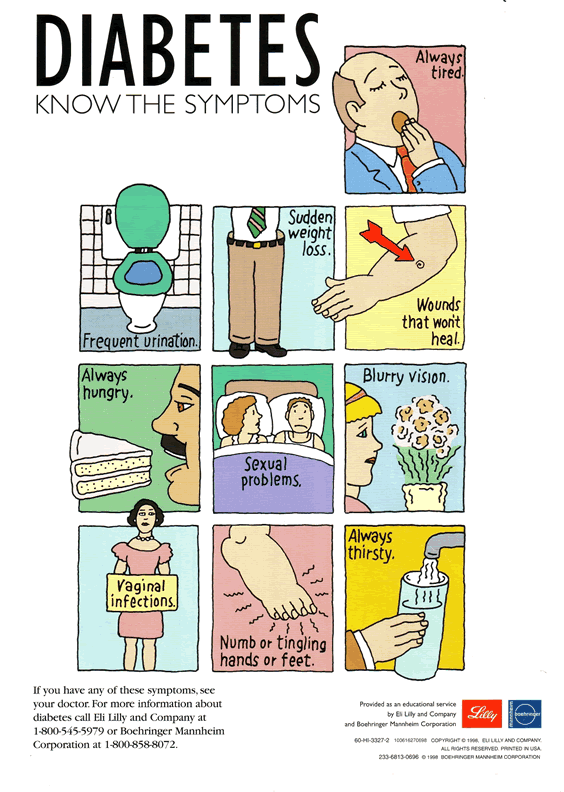
Debunking myths about diabetes

Most people think that if you are at high risk for diabetes you may get it, but this isn’t necessarily the case.  According to an article published by the AARP in their November/December 2010 issue, “People who lost even a little weight and exercised consistently (a goal of 30 minutes five days a week) reduced their risk of developing type 2 diabetes by 58 percent. (People 60 and up cut their risk by a whopping 71 percent).” This is just one example of the many myths that surround diabetes.


Myth #1: A special diet needs to be followed
That isn’t true anymore, “new research suggests that diabetics are best served by following the same healthy guidelines everyone else does: plenty of fruits, vegetables, whole grains, lean meat and dairy products, and sparing amounts of heart-healthy fats.

Myth #2: There is a cure
There isn’t a cure for type 1 and type 2 diabetes, but it can be controlled without medication.  A study in 2008 published in the Annals of Internal Medicine, found that 56% of type 2 diabetics could follow a Mediterranean-style diet and control their diabetes without the use of medication.

Myth #3: Being overweight causes diabetes
34% of adults 20 and over are obese but only 10.7% of them actually have diabetes.  Experts are saying that if a person is overweight and is genetically predisposed to diabetes, then there is more of a risk.

Myth #4: Insulin pills are the first step in the medication process
There are medications that can be taken before an insulin pill is prescribed. But, if exercise and a healthy diet are followed, then no medication is needed.


Home Care Assistance offers the highest quality 24/7 live-in home care in the Region of Halton (Oakville, Burlington, Halton Hills, and Milton), Region of Peel (Mississauga, Brampton and Caledon) and Hamilton.

Which vitamins are important for seniors to take?


As we age, certain health conditions arise that require daily medication.  For instance, if you have hypertension, you take a blood pressure pill daily. If you have high cholesterol or another ailment, medication can be taken to keep your symptoms under control.  What we sometimes forget that is very important, is that many of these medications can affect the absorption of vitamins into our bodies.

The Cleveland Clinic claims that, “deficiencies in vitamins exist in about a third of the elderly.”  However, there are over-the-counter vitamins that we can take to correct these deficiencies such as, Vitamin D, Vitamin A, Vitamin C, Vitamin B and Folate.

Vitamin D is especially important to take because it treats those with osteoporosis, which is common among seniors.  Taking vitamin D regularly keeps calcium levels high and lessens the bone loss that occurs with kidney failure.

Vitamin A is another essential supplement as it helps with good eyesight and a healthy immune system.  As noted by the U.S. National Library of Medicine, Vitamin A “is used in the treatment for cancer and to prevent heart disease.”

Vitamin C, on the other hand, works to limit the development of dementia, Alzheimer’s, heart disease, glaucoma, arthritis and stroke, according to the U. S. National Library of Medicine.

Vitamin B-12 helps to maintain our energy levels.  Folate, which is another type of vitamin B, helps with preventing stroke, heart disease, breast cancer and colon cancer for seniors.

Now that you have a rundown of all the important vitamins seniors should consume, remember to consult with your doctor first before you start taking any new supplements.

Courtesy of Home Care Blog

 Home Care Assistance offers the highest quality 24/7 live-in home care in the Region of Halton (Oakville, Burlington, Halton Hills, and Milton), Region of Peel (Mississauga, Brampton and Caledon) and Hamilton.

"Taste receptors" found in lung; potential breakthrough in asthma treatment

A University of Maryland study, published in Nature Magazine, has shown that bombarding taste receptors in the lungs of mice with bitter-tasting compounds opened their airways and eased breathing. These taste receptors can be found on the smooth muscle of the lungs and have a different composition from the well-known taste buds in your mouth. The most notable difference is the fact that the taste receptors in the lung do not send signals to the brain however still respond to exposure to bitter compounds. Being on the smooth muscle lining, this discovery could be a breakthrough in asthma medication and treatment which is focused on opening the contracted muscle lining. Lead researcher, Dr. Stephen Liggett believes that an inhaler based on bitter substances such as quinine or saccharine could "replace or enhance" current treatment "more profoundly than any known drug that we have." However, simply eating bitter foods does not yield the same results not prevent people from asthma attacks.

Dr. Yassine Amrani from the University of Leicester was pleased by the study and believes the next step is to reproduce the effect in humans and prevent any unwanted side effects such as inflammation.

The concept of having bitter taste receptors in the smooth muscle of the airways is a new one, and activating this receptor could offer a new way to relax them. -- Dr. Yassine Amrani, University of Leicester
Asthma UK was quick to announce that new drugs based on this research would not hit the market for many years however is very excited by the prospects of the asthma treatments. Leanne Metcalf, the director of research at Asthma UK felt that research into new treatments was "vital" as the millions of current asthmatics still have trouble controlling their symptoms using existing drugs.
The effectiveness of bitter substances at overcoming the airway narrowing that causes asthma symptoms has so far only been tested in mice, however this somewhat surprising approach does make sense in terms of what we already know about the cell signalling processes involved in asthma... with further in-depth research, this approach could potentially pave the way for a new range of asthma treatments based on bitter substances which could either supplement or replace existing asthma treatments but if this were possible, it would be a long way into the future. -- Leanne Metcalf, director of research at Asthma UK
Source: BBC Health

Home Care Assistance offers the highest quality 24/7 live-in home care in the Region of Halton (Oakville, Burlington, Halton Hills, and Milton), Region of Peel (Mississauga, Brampton and Caledon) and Hamilton.

How to Live to 102 - Secret #34

Take supplements. Supplements can and do play a part in maintaining good health. Get informed on what types of supplements you may need and what quantities are recommended for optimum health.

Courtesy of  Tips For Good Health


Home Care Assistance offers the highest quality 24/7 live-in home care in the Region of Halton (Oakville, Burlington, Halton Hills, and Milton), Region of Peel (Mississauga, Brampton and Caledon) and Hamilton.

Study: Soft Drinks, Sleeping Pills Linked to Heartburn

If heartburn is keeping you awake at night, you may want to lay off the carbonated beverages or sleeping pills if this uncomfortable condition is affeccting your sleep. A new study on the risk factors associated with night-time heartburn found that drinking carbonated soft drinks and ingesting benzodiazepines, a commonly-prescribed class of sleeping pill, are among the strongest predictors of heartburn. The study, which appeared in the journal Chest, is the largest study undertaken to date on the incidence and risk factors associated with nighttime heartburn.

Heartburn is a symptom of a condition called gastroesophageal reflux disease (GERD). GERD occurs when stomach acids creep up into the esophagus, causing burning and chest pain and sometimes leaving a bad taste in your mouth. For many people, it can be brought on by big heavy meals, spicy foods, or alcohol. Lying down too soon after eating can also bring on heartburn. Many people have the mild form of GERD, where symptoms happen less than 3 times per week and do not interfere with sleep or daily activity. When GERD happens more frequently and to the extent that it keeps you awake, it is classified as severe. While mild GERD can generally be managed through lifestyle modifications or non-prescription medications, severe GERD usually requires prescription medication or even surgery and can even be a risk factor for esophageal cancer.
"There are simple lifestyle changes people can make to help reduce their frequency of heartburn during sleep. Reducing consumption of carbonated soft drinks, replacing benzodiazepines with other types of sleeping pills, and losing weight can all help reduce nighttime heartburn." --Dr. Paul A. Kvale, president of the American College of Chest Physicians.
The study is the first to look at how many people are being kept up at night, said the study's author, Dr. Ronnie Fass. The study involved more than 15,000 Americans, all of whom filled out questionnaires on their sleep habits, medical history, social habits, and more.
"We found that up to a quarter of the U.S. population loses sleep because of nighttime heartburn, and many of these individuals have related sleep complaints and suffer from excessive daytime sleepiness," Dr. Fass said.
Because excess weight is a known risk factor for heartburn and was found in the study to be one of the predictors, it's possible the rate of nighttime heartburn is lower in Canada. About half the population here is considered overweight or obese, compared to two thirds of Americans.

Among the factors that were strong predictors were soft drinks (likely because of their acidity, the researchers said), certain prescription sleeping pills known as benzodiazepines (such as diazepam (Valium), triazolam (Halcion), lorazepam (Ativan), and alprazolam (Xanax)), and having high blood pressure or asthma. Sleeping problems such as insomnia, snoring, and daytime sleepiness were also associated with nighttime heartburn.

But the good news is that the experts don't believe people who report nighttime heartburn are doomed to uncomfortable, sleepless nights.

Courtesy of Canada.com

Home Care Assistance offers the highest quality 24/7 live-in home care in the Region of Halton (Oakville, Burlington, Halton Hills, and Milton), Region of Peel (Mississauga, Brampton and Caledon) and Hamilton.

Eli Lilly Drug Failure Causes Questions in Alzheimer's Research


As reported in The New York Times, the drug being tested by Eli Lilly for Alzheimer’s has been put on hold. The drug was found not to work, but that was not the real reason for its failure. Researchers found that the drug made the patients’ symptoms of memory loss worsen and their ability to care for themselves decrease.
“Failures certainly don’t build energy and enthusiasm. The market is still there, but failures do take their toll.” -- Eli Lilly researcher.
The findings from this study put into question the hypothesis that researchers have been following for why Alzheimer’s begins. The hypothesis deals with the protein beta amyloid, which accumulates in the brain and can cause this disease. The hypothesis stated that if these proteins were reduced, the disease may be slowed, stopped or prevented. The drug that Eli Lilly was testing did in fact lower levels of the protein beta amyloid. However, the result was not what they expected.

Researchers are now saying that the Lilly result shows that their hypotheses are too simplistic. Other recent studies have found that PET scans of the brain and tests of cerebrospinal fluid can detect people who are at risk for the disease. However, those tests are now only a benefit to companies that are testing new therapies. No good comes from diagnosing people early if there is nothing they can do to prevent what is inevitable. Some researchers are still hopeful and will continue to follow the amyloid hypothesis, however, companies are trying out new approaches.

Home Care Assistance offers the highest quality 24/7 live-in home care in the Region of Halton (Oakville, Burlington, Halton Hills, and Milton), Region of Peel (Mississauga, Brampton and Caledon) and Hamilton.


Converted by Ritesh Sanap | Sponsored by Downloaddeck.com Powered by Giant Themes